






Choosing the right funeral flower arrangement involves balancing personal sentiment, cultural expectations, and practical considerations — all during one of the most emotionally challenging times a family can face. Different arrangement types serve different purposes at a funeral service, and understanding the role each one plays helps senders select flowers that are both appropriate and meaningful.
In This Article
ARRANGEMENT TYPES · BY RELATIONSHIP · FLOWERS & COLORS · CULTURAL CONSIDERATIONS · PRACTICAL DECISIONS · ALTERNATIVES · FAQ · CONCLUSION
This guide covers the main types of funeral flower arrangements, explains which situations each one suits best, and provides guidance on flower selection, color choices, and cultural considerations specific to the diverse Los Angeles community.
UNDERSTANDING FUNERAL ARRANGEMENT TYPES

Funeral flowers fall into several distinct categories, each designed for a specific purpose and placement within the service.
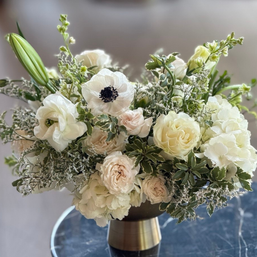
Sympathy vase arrangements are the most versatile and commonly sent option. Designed in a vase, they can be displayed at the funeral home during the service and easily transported to the family's home afterward. They range from modest ($55–$85) to premium ($165–$300+) and are appropriate from virtually any sender. Browse sympathy arrangements to see available options.
Standing sprays are large, formal arrangements displayed on easel stands beside the casket. They are one-sided or double-sided and serve as prominent visual tributes. Standing sprays are typically sent by close family, business associates, or organizations. For a detailed comparison with wreaths, see the spray vs wreath guide.
Funeral wreaths are circular designs on easel stands, symbolizing eternity and the cycle of life. They carry deep traditional symbolism and are appropriate for any relationship level, though they are most commonly sent by family and close friends.
Casket sprays are placed directly on the casket and are traditionally ordered by the immediate family. They are the most personal and prominent funeral floral piece — the arrangement that the family selects to honor their loved one most directly.
Funeral crosses are cross-shaped floral designs on easels, appropriate for Christian services. They carry explicit religious symbolism and should be chosen with awareness of the deceased's faith tradition.
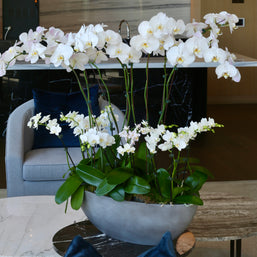
Sympathy plants and orchids offer an alternative to cut flowers. Potted orchids, peace lilies, and other green plants provide lasting comfort — they continue to grow and can serve as a living memorial in the family's home.
CHOOSING BY YOUR RELATIONSHIP TO THE DECEASED

Your relationship with the deceased and their family is the most reliable guide for selecting the appropriate type and scale of arrangement.
Immediate family (spouse, children, parents): The immediate family typically handles the casket spray and may also order one or more standing pieces for prominent display. These are the centerpiece arrangements that define the visual setting of the service. Budget $500–$2,000+ depending on the scale of the service. See the funeral flower cost guide for detailed pricing.
Close family and dear friends: A medium-to-large vase arrangement ($100–$250) or a standing spray ($175–$400) communicates the depth of the relationship. These senders know the deceased well enough to choose flowers or colors that reflect their personality or preferences.
Friends, neighbors, and extended family: A sympathy vase arrangement ($75–$150) is appropriate and appreciated. It acknowledges the loss respectfully without the formality of a standing piece. Consider sending to the family's home rather than the funeral home, especially if many arrangements are expected at the service.
Colleagues and professional associates: Individual colleagues typically send modest arrangements ($60–$100). Company or department-level contributions are often pooled to send a single impressive standing spray or large arrangement ($150–$350), which carries more visual impact than multiple small individual pieces.
Acquaintances: A small sympathy arrangement ($55–$75) or a sympathy card with a thoughtful message is entirely appropriate. The gesture of acknowledgment matters more than the scale of the arrangement.
FLOWER AND COLOR SELECTION
Flower choice and color palette communicate tone and sentiment. Traditional selections carry widely understood meanings, while personalized choices add individual significance.
Traditional funeral flowers:
White flowers — roses, lilies, carnations, chrysanthemums — are the most universally appropriate choice for funeral arrangements. White symbolizes peace, purity, and reverence across most cultural traditions. An all-white arrangement is never wrong regardless of the context or the sender's relationship. Learn more about appropriate funeral flowers.
Lilies are one of the most traditional funeral flowers, particularly white Oriental and Asiatic lilies. They symbolize the restored innocence of the departed soul and carry a gentle fragrance that many associate with memorial settings.
Roses convey love, respect, and admiration. White roses for reverence, pink for gratitude and grace, red for deep love and grief. Roses work in every type of funeral arrangement — from simple vase designs to elaborate casket sprays.
Chrysanthemums are a traditional symbol of death and mourning in many cultures. White chrysanthemums are standard in funeral work and provide excellent coverage and longevity in larger arrangements.
Color guidance:
White, cream, and soft pastels (lavender, pale pink, soft blue) are universally safe for funeral flowers. Brighter colors — yellow, coral, vibrant pink — are appropriate when they reflect the personality of the deceased or when the family has expressed a preference for a celebration-of-life aesthetic rather than a traditional somber tone.
CULTURAL AND RELIGIOUS CONSIDERATIONS

Los Angeles is one of the most culturally diverse cities in the world, and funeral flower customs vary significantly across traditions. Understanding the cultural context of the service helps ensure your floral tribute is appropriate and respectful.
Christian services: Flowers are customary and welcomed. Crosses, standing sprays, wreaths, and vase arrangements are all appropriate. White and pastel colors are traditional. Flowers are typically displayed at the funeral home and church.
Jewish services: Flowers are generally not sent to the funeral or shiva house in traditional Jewish practice. Instead, sending food, making a charitable donation in the deceased's name, or simply attending the service and shiva are preferred. More liberal congregations may accept flowers, but when in doubt, choose a non-floral tribute.
Catholic services: Flowers are appropriate and common. Arrangements sent to the funeral home are standard. Some families request mass cards or memorial donations in addition to or instead of flowers — follow the family's guidance as stated in the obituary.
Buddhist services: White and yellow flowers are traditional. Chrysanthemums, lilies, and lotus flowers carry specific meaning. Overly bright or festive arrangements are generally not appropriate. Simple, elegant white arrangements are the safest choice.
Islamic services: Flowers are generally acceptable but should be modest and simple. White is preferred. Elaborate or showy arrangements are not appropriate. Some families may prefer charitable donations instead — check the obituary for guidance.
Hispanic/Latino traditions: Flowers are an important part of funeral customs. Large, abundant arrangements are common and appreciated. Marigolds hold special significance in Mexican tradition. White and red are common color choices.
Korean services: Chrysanthemums (particularly white) are traditional funeral flowers. Wreaths with the sender's name displayed on a banner are customary for larger services.
When unsure: A white vase arrangement of roses, lilies, and mixed greenery is appropriate across virtually all cultural traditions. When the obituary does not specify flower preferences, this is the safest default.
DID YOU KNOW
In Los Angeles County alone, funeral homes receive an estimated 15,000–20,000 flower deliveries per month. The city's extraordinary cultural diversity means that local florists who specialize in sympathy work must be fluent in the funeral flower customs of dozens of different traditions — from Armenian and Persian to Filipino, Ethiopian, and Samoan communities. This cultural competence is one reason why working with an experienced LA florist for funeral flowers is particularly valuable.
PRACTICAL DECISIONS
Funeral home vs. home delivery: Arrangements sent to the funeral home are displayed during the service. Arrangements sent to the family's home arrive after the service and provide comfort in the days and weeks that follow. Both are appropriate — consider sending to the home if you expect many arrangements at the service, or if you want your gesture to arrive when the family is most in need of comfort. Learn more about funeral home flower delivery.
Timing: Funeral flowers should arrive at the funeral home before the start of the visitation or service. Most funeral homes accept deliveries starting the morning of the event. For same-day funeral delivery, order before the afternoon cutoff.
Card message: Include a brief, sincere message. Keep it simple — "With deepest sympathy" or "In loving memory of [name]" is always appropriate. Sign with your full name so the family can identify the sender. For more guidance, see the sympathy card message guide.
Ordering information needed: The name of the deceased, the funeral home name and address, and the date and time of the service. Providing this information ensures accurate and timely delivery.
ALTERNATIVES TO TRADITIONAL ARRANGEMENTS
For families or senders looking beyond traditional cut flower arrangements:
Sympathy plants: Potted orchids, peace lilies, fiddle-leaf figs, and other green plants provide lasting comfort. They continue to grow and can serve as a living reminder of the person lost. Plants are particularly appropriate when the family has limited space for cut flowers or when flowers are not customary in their tradition.
Sympathy gift baskets: Comfort food, candles, self-care items, and memorial keepsakes offer practical support during a difficult time. They complement rather than replace flowers and are especially appreciated in the weeks after the service.
Memorial donations: Many obituaries request donations to a specific charity in lieu of flowers. Honoring this request and informing the family of your donation through a card is a meaningful alternative.
Subscription arrangements: Some senders choose to send a series of smaller arrangements over several weeks rather than one large piece at the service. This approach provides ongoing comfort during the extended grieving period when many families feel most alone.
FAQ
What is the most appropriate funeral flower arrangement to send?
A sympathy vase arrangement in white and soft pastel tones is universally appropriate regardless of your relationship to the deceased. For close family and friends, standing sprays and wreaths are also appropriate. The casket spray is traditionally the family's responsibility.
Should I send flowers to the funeral home or the family's home?
Both are appropriate. Funeral home delivery ensures your arrangement is visible during the service. Home delivery provides comfort in the days after, when the family returns to an empty house. If many arrangements are expected at the service, home delivery can be a thoughtful alternative.
What colors are appropriate for funeral flowers?
White, cream, and soft pastels are universally safe. Bright colors are appropriate for celebration-of-life services or when they reflect the personality of the deceased. When in doubt, choose white — it is appropriate across all cultural and religious traditions.
How much should I spend on funeral flowers?
Close family typically budgets $500–$2,000+ for service flowers. Friends and extended family: $75–$250. Colleagues: $60–$150 individually or $150–$350 for a group contribution. Any sincere gesture is appreciated regardless of price. See the complete cost guide for detailed pricing.
Is it appropriate to send flowers after the funeral?
Yes. Sending flowers one to two weeks after the funeral — when initial support has faded and grief often intensifies — is a particularly thoughtful gesture. A simple vase arrangement with a note acknowledging ongoing support can mean a great deal. Read more about when to send sympathy flowers.
What if the obituary says "in lieu of flowers"?
Honor the family's request. Make a donation to the specified charity and send a card informing the family of your contribution. If no charity is specified, a sympathy gift or personal card is an appropriate alternative.
CONCLUSION
Choosing the right funeral flower arrangement is an act of care — a way to communicate love, respect, and support when words often feel inadequate. By considering your relationship, the cultural context, the type of service, and the practical logistics, you can select an arrangement that honors the deceased and provides genuine comfort to those grieving.
For funeral flower delivery in Los Angeles with same-day availability, culturally informed design, and coordination with local funeral homes, Pink Clover Flowers offers a complete range of sympathy arrangements designed with dignity and care. Contact us for assistance with funeral and sympathy flower orders.


