





The question "how many types of flowers are there?" sounds simple, but the answer reveals the staggering diversity of the natural world. There are approximately 350,000 known species of flowering plants on Earth — and scientists estimate that thousands more remain undiscovered, primarily in tropical rainforests and remote mountain regions. From the massive Rafflesia arnoldii (a parasitic flower that can measure three feet across and smells like rotting flesh) to the tiny Wolffia globosa (a duckweed flower smaller than a grain of rice), the range of flower forms is almost incomprehensibly vast. This guide organizes that diversity into practical categories — the major flower families, the most popular types used in arrangements, the differences between annuals and perennials, and the varieties most commonly available from Los Angeles florists.
In This Article
HOW MANY TYPES · MAJOR FAMILIES · CUT FLOWERS · GARDEN FLOWERS · EXOTIC & TROPICAL · CHOOSING · FAQ · CONCLUSION
For seasonal flower availability in LA, see the seasonal flowers guide. For flower symbolism, see the language of flowers guide.
HOW MANY TYPES OF FLOWERS EXIST

Flowering plants (angiosperms) are the most successful group of land plants on Earth. Of the approximately 390,000 known plant species, roughly 350,000 are flowering plants. They dominate every terrestrial ecosystem except the most extreme deserts and polar regions. Flowering plants produce the food we eat (grains, fruits, vegetables are all products of flowers), the oxygen we breathe, the medicines that heal us, and the beauty that enriches daily life.
The number 350,000 deserves context. That is more species than all mammals, birds, reptiles, amphibians, and fish combined. It means that for every species of animal with a backbone on this planet, there are roughly ten species of flowering plant. The diversity is not evenly distributed — the largest flower families contain thousands of species each, while hundreds of tiny families contain just a handful.
New flower species are still being discovered regularly. Between 2010 and 2020, scientists described approximately 2,000 new flowering plant species per year — most from tropical regions in South America, Southeast Asia, and sub-Saharan Africa. The Amazon Basin alone is estimated to contain thousands of undescribed flowering plant species. The botanical world is far from fully catalogued, and the total number of flowering plant species may ultimately exceed 400,000.
For practical purposes, the flowers available from a Los Angeles florist represent a curated selection from this vast diversity — roughly 200–300 commercially cultivated flower varieties drawn from perhaps 50–60 major families. Understanding these families and their characteristics helps you make more informed, intentional choices when selecting flowers for gifts, home décor, events, and personal enjoyment.
MAJOR FLOWER FAMILIES
Rosaceae (rose family): The most economically important ornamental flower family. Contains approximately 4,800 species, including roses, cherry blossoms, apple blossoms, and hawthorn. Roses alone account for roughly 30% of all cut flower sales globally, making them the single most commercially significant flower. The rose family is characterized by five-petaled flowers (in their wild form), although cultivated roses have been bred to produce the densely layered blooms we associate with modern garden and hybrid tea varieties. See the rose color guide.
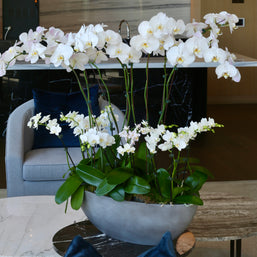
Orchidaceae (orchid family): The largest flower family on Earth, with approximately 28,000 known species — nearly 10% of all flowering plants. Orchids are found on every continent except Antarctica and have evolved extraordinary adaptations, including flowers that mimic female insects to attract pollinators, roots that photosynthesize, and symbiotic relationships with specific fungi. In the commercial flower market, phalaenopsis (moth orchids) dominate, but cymbidium, dendrobium, and cattleya orchids are also popular. See the orchid luxury guide.
Asteraceae (daisy/sunflower family): The second-largest flower family with approximately 32,000 species. What appears to be a single sunflower bloom is actually a composite of hundreds of tiny individual flowers — the outer "petals" are ray florets and the dark center contains disc florets. This family includes sunflowers, daisies, chrysanthemums, dahlias, zinnias, and marigolds. Chrysanthemums are among the most important commercial flowers globally, particularly in Asian markets where they carry deep cultural significance.
Liliaceae (lily family): Contains the true lilies — Asiatic, Oriental, trumpet, and Longiflorum types — as well as tulips and fritillarias. Lilies are among the most popular cut flowers worldwide, prized for their large, dramatic blooms and strong fragrance (particularly Oriental varieties). Tulips, also in this extended family, are the world's most commercially produced bulb flower. See the lily meaning guide.
Ranunculaceae (buttercup family): Contains ranunculus, anemones, delphiniums, and clematis. Ranunculus — with their densely layered, rose-like petals — have become one of the most photographed and sought-after flowers in modern floral design. Anemones, with their dark centers and delicate petals, are the star of winter and early spring arrangements.
Paeoniaceae (peony family): A small family containing only about 33 species, but their cultural and commercial impact is enormous. Peonies are among the most coveted flowers in the world — their lush, multi-layered blooms, intoxicating fragrance, and brief seasonal availability (April through June) create demand that consistently outstrips supply. Peonies symbolize prosperity, good fortune, and romantic love in both Western and Asian traditions. See the peony meaning guide.
MOST POPULAR CUT FLOWERS FOR ARRANGEMENTS
Of the 350,000 known flowering species, approximately 200–300 are commercially cultivated as cut flowers. Of those, a much smaller group dominates the market — the flowers you are most likely to encounter at a florist, in a bouquet, or in a professional arrangement.
Roses: The undisputed leader in cut flower sales. Available year-round in dozens of colors and varieties — from classic long-stem hybrid teas to lush garden roses to delicate spray roses. Roses are the foundation of most florists' inventory and the default choice for romance, sympathy, celebration, and daily beauty. No other single flower covers as many occasions or emotions.
Tulips: The most popular spring bulb flower and a symbol of renewal, elegance, and simple beauty. Dutch tulips are available from January through May, with peak availability in March and April. Tulips continue growing after cutting, creating dynamic arrangements that change shape over their display life — a quality that either delights or frustrates, depending on your perspective.
Peonies: Available only from April through June (with brief extensions from imported sources), peonies are the most anticipated flower of the spring season. Their limited availability creates urgency and desirability that year-round flowers cannot match. When peonies are available, they are the premium choice for weddings, luxury gifts, and anyone who appreciates extraordinary flowers.
Sunflowers: The happiness flower — bright, warm, and universally cheerful. Sunflowers communicate joy and optimism in a way that more refined flowers do not. They are increasingly popular in Los Angeles, where their warm, California-sun energy aligns with the city's personality. Available year-round with peak quality from June through October.
Lilies: Dramatic, fragrant, and available in a wide range of colors. Oriental lilies provide the strongest fragrance of any common cut flower. Asiatic lilies offer the broadest color range. Calla lilies (technically a different family, Araceae) provide sleek, modern elegance. All lilies offer excellent vase life (10–14 days) and dramatic visual presence.
Orchids: As cut stems in arrangements (primarily cymbidium and dendrobium) and as potted plants (primarily phalaenopsis), orchids occupy the luxury tier of the flower market. Their exotic beauty, extraordinary longevity (potted orchids bloom for months), and association with refinement make them the choice for sophisticated gifts and modern home décor.
Ranunculus: The spring darling of modern floral design. Their tightly layered, rose-like petals and jewel-tone colors photograph beautifully and add textural complexity to any arrangement. California is a major producer, making LA one of the best markets for fresh, affordable ranunculus during peak season (February through May).
GARDEN FLOWERS FOR LOS ANGELES
Los Angeles's Mediterranean climate (mild, wet winters and warm, dry summers) supports an extraordinarily diverse range of garden flowers. The city's USDA hardiness zones (10a and 10b) allow gardeners to grow flowers that are impossible in most of the United States — from tropical species to Mediterranean natives to adapted temperate-zone varieties.
Year-round bloomers: Bougainvillea (the quintessential LA plant), lantana, geraniums, plumbago, and lavender provide continuous color throughout the year. These are the workhorses of LA landscaping — drought-tolerant, sun-loving, and reliably beautiful in the conditions that define Southern California.
Spring bloomers: California poppies (the state flower), wisteria, jacaranda (technically a tree, but its spring flowering is one of LA's most spectacular natural events), irises, and ranunculus fill gardens with color from March through May. Spring in LA is a peak gardening season, when the combination of warming soil and residual winter moisture creates ideal growing conditions.
Summer bloomers: Dahlias, zinnias, sunflowers, plumeria, hibiscus, and bird of paradise thrive in LA's warm, dry summers. Dahlias in particular have become a gardening obsession in Southern California — their extraordinary diversity of form and color, combined with their love of warm days and cool nights, makes LA one of the best dahlia-growing regions in the country.
Winter bloomers: Camellias, hellebores, narcissus, and winter-blooming jasmine provide color during LA's mild winter months. The city's frost-free climate means that winter gardens remain active rather than dormant — a major advantage for year-round garden enjoyment. See the winter flowers guide for winter-specific options.
EXOTIC AND TROPICAL FLOWERS

Los Angeles's position as a major import hub gives local florists access to exotic and tropical flowers from around the world. Hawaii, Central America, South America, and Southeast Asia all supply exotic blooms that add drama and uniqueness to arrangements.
Bird of paradise (Strelitzia): The official flower of the City of Los Angeles, the bird of paradise is both a garden plant (it grows throughout the city) and a striking cut flower. Its orange and blue crane-like blooms are architecturally dramatic and last 7–14 days as cut stems. No flower is more distinctly "Los Angeles" than the bird of paradise.
Protea: South African native flowers with extraordinary geometric forms — king proteas can measure 12 inches across, with thick, waxy petals arranged in concentric patterns. Proteas add a sculptural, modern quality to arrangements that no other flower replicates. They dry beautifully, making them both a fresh and permanent decorating option.
Anthurium: Heart-shaped, waxy flowers in red, pink, white, and green that last 2–3 weeks as cut stems — among the longest-lasting of all cut flowers. Anthuriums add a tropical, modern quality to arrangements and are popular in contemporary LA design.
Plumeria (frangipani): The iconic Hawaiian lei flower, with intensely fragrant, waxy blooms in white, pink, yellow, and red. Plumeria trees grow throughout LA (particularly in warmer neighborhoods) and their fallen flowers are among the most intoxicatingly fragrant blossoms in the natural world.
Heliconia: Dramatic tropical flowers with lobster-claw-shaped bracts in red, orange, and yellow. Heliconias add sculptural height and tropical energy to large arrangements and are available year-round through LA's import channels.
DID YOU KNOW
The smallest flower in the world belongs to Wolffia globosa, a type of duckweed — the entire plant (including flower) is about 0.3 millimeters wide, small enough that a dozen could fit on the head of a pin. The largest flower belongs to Rafflesia arnoldii, found in the rainforests of Southeast Asia — it can measure up to 3 feet (91 cm) in diameter and weigh up to 24 pounds. Despite its impressive size, Rafflesia has no stems, leaves, or roots — it is a parasitic plant that lives entirely inside its host vine, only emerging to produce its enormous, foul-smelling flower. The smell, reminiscent of rotting meat, attracts the carrion flies that pollinate it. This extreme range — from 0.3 mm to 91 cm — illustrates the remarkable evolutionary flexibility of flowering plants.
HOW TO CHOOSE THE RIGHT FLOWER TYPE
With hundreds of flower types available from a Los Angeles florist, the selection process can feel overwhelming. These practical guidelines simplify the choice by matching flower characteristics to common needs.
For romantic occasions: Red roses remain the gold standard for romantic communication. Peonies add luxury and sophistication. Ranunculus offer romantic beauty with a modern, design-forward quality. See the Valentine's guide.
For sympathy and remembrance: White roses, white lilies, and white orchids communicate reverence and respect. Mixed white arrangements with green accents create the most appropriate sympathy presentation. See the funeral flower guide.
For celebration and joy: Sunflowers, mixed colorful bouquets, bright tulips, and cheerful daisies communicate happiness and congratulations. See the birthday flower guide.
For lasting gifts: Orchid plants provide months of beauty. Preserved roses in luxury boxes last 1–3 years. Living plants (succulents, potted flowers) offer indefinite beauty with proper care.
For home décor: Match flower types to your interior style. Minimalist homes suit orchids and monochromatic arrangements. Bohemian spaces suit wildflower mixes and textured garden-style arrangements. Modern LA aesthetics suit proteas, anthuriums, and architectural arrangements. See the home décor guide.
For budget-conscious gifting: Carnations, chrysanthemums, Peruvian lilies (alstroemeria), and seasonal mixed bouquets offer excellent beauty-per-dollar value. A well-designed arrangement of affordable flowers from a skilled florist consistently outperforms a poorly arranged collection of expensive flowers from a generic source. See the delivery service guide.
FAQ
How many types of flowers are there in the world?
There are approximately 350,000 known species of flowering plants (angiosperms) on Earth, with an estimated 2,000 new species described by scientists each year. Of these, approximately 200–300 are commercially cultivated as cut flowers, and a smaller subset of perhaps 50–60 varieties make up the majority of what is available at a typical florist.
What is the most popular flower in the world?
Roses are the most commercially sold flower worldwide, accounting for approximately 30% of all cut flower sales globally. Chrysanthemums are the most popular flower in Asia. Tulips are the most popular spring bulb flower. Orchids are the best-selling potted plant. Each "most popular" designation depends on how popularity is measured.
What flowers grow best in Los Angeles?
LA's Mediterranean climate supports bougainvillea, plumeria, bird of paradise, roses, lavender, jasmine, dahlias, sunflowers, California poppies, and succulents — among hundreds of other species. The city's mild winters and warm summers, combined with USDA zones 10a–10b, allow gardeners to grow flowers from tropical, Mediterranean, and temperate zones.
What is the rarest flower in the world?
Several flowers compete for the "rarest" title. The Middlemist Red camellia exists in only two known locations worldwide (one in New Zealand, one in England). The Ghost Orchid (Dendrophylax lindenii) is extremely rare in the wild, found only in Cuba and a few Florida swamps. The Kadupul flower (Epiphyllum oxypetalum) blooms only at night and wilts before dawn, making it impossible to pick or sell.
What is the difference between annuals and perennials?
Annual flowers complete their life cycle in one growing season — they germinate, flower, set seed, and die within a single year. Perennial flowers return year after year from the same root system. In LA's mild climate, many plants that are treated as annuals in colder regions (such as geraniums and petunias) can function as perennials, surviving multiple years without winter die-back.
Which flowers last the longest in a vase?
Chrysanthemums and carnations lead the longevity category at 2–3 weeks. Alstroemeria (Peruvian lilies) last 10–14 days. Orchids (cut cymbidium stems) last 10–14 days. Roses last 7–12 days with proper care. Lilies last 10–14 days. Potted orchid plants, of course, bloom for 2–3 months — the ultimate in lasting floral beauty. See the flower care guide.
CONCLUSION
The 350,000 known species of flowering plants on Earth represent one of nature's most spectacular achievements — a diversity of form, color, fragrance, and function that has shaped human culture for millennia. While no one needs to know all 350,000 species, understanding the major families, the most popular commercial varieties, and the characteristics that make each flower type unique transforms flower selection from an overwhelming choice into an informed, intentional one. In Los Angeles, where the climate supports extraordinary floral diversity and the flower market offers some of the best sourcing in the world, the full spectrum of the flower kingdom is available — from a single rose to a tropical protea to a garden-grown California poppy.
For flower delivery in Los Angeles, Pink Clover Flowers offers premium roses, peonies, orchids, sunflowers, tulips, and seasonal bouquets — sourced daily from the LA Flower Market and delivered same-day across the metro area.


